
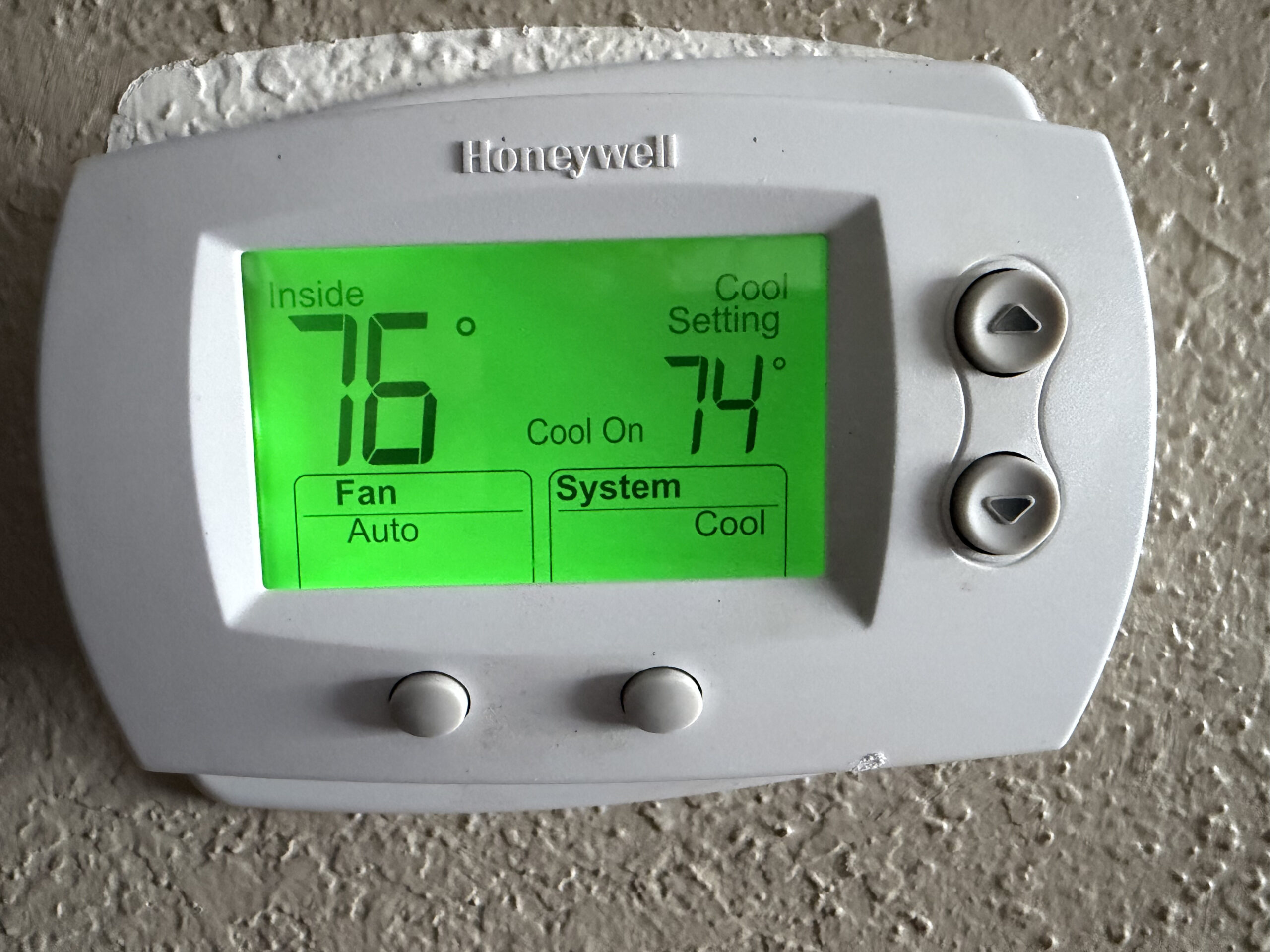
If your AC won’t reach the temperature you set in Tampa Bay, FL, you’re not alone. This is the
most common HVAC complaint we hear from homeowners across Tampa, St.
Petersburg, Clearwater, Brandon, and Wesley Chapel every summer. The system is
running, cold air is coming out, but the thermostat just won’t hit that 72°F target. There’s
always a specific reason — and it’s almost always tied to the way Tampa Bay’s extreme heat
and humidity interact with your equipment.
Why Tampa Bay Makes This Problem Worse Than Almost Anywhere Else
AC systems are engineered to maintain indoor temperatures roughly 20°F below the outdoor temperature. In most of the country, that math works fine. But when it’s 97°F outside in July with 88% humidity at 3pm — a
completely normal summer afternoon in Hillsborough and Pinellas counties — you’re asking your system to
do something it was barely designed to do.
Tampa Bay consistently ranks in the top five most humid metro areas in the United States. That humidity is the key variable. On a peak summer day, dehumidification can consume 30–40% of your system’s total
cooling capacity — energy that never shows up as a lower thermostat reading.
Homeowners near the water — in Clearwater Beach, Dunedin, Safety Harbor, and South Tampa — face an
additional issue: salt air corrosion on outdoor condenser units. Salt deposits on condenser fins reduce heat- transfer efficiency year over year, quietly widening the temperature gap each season.
7 Reasons Your AC Won’t Reach Its Set Temperature in Tampa Bay
REASON 01
Tampa Bay Humidity Overloading the System
When outdoor humidity sits at 80–90%, your AC devotes a massive share of its capacity to moisture removal — leaving less available for actual temperature reduction. This alone creates a 2–3°F gap on the most humid days in Hillsborough and Pinellas counties.
REASON 02
Dirty or Clogged Air Filter
Tampa Bay's year-round AC season and high pollen count means filters clog faster here than almost anywhere else. A clogged filter starves your system of airflow. Check and replace every 30–45 days in summer.
REASON 03
Low Refrigerant (Slow Freon Leak)
A slow refrigerant leak — common in older systems across Brandon, Riverview, and New Tampa — gradually reduces the system's ability to pull heat out of your home, widening the temperature gap over time.
REASON 04
Undersized AC System
An AC sized for "average" Florida conditions may genuinely lack the capacity for Tampa Bay's extreme summer heat loads. Without a proper Manual J load calculation for our local climate, the system can't keep up on peak days.
REASON 05
Poor Attic Insulation or Air Sealing
Tampa Bay attics routinely reach 140–160°F in July. Without adequate insulation, that heat radiates into your living space 24/7 — no matter how hard your AC works.
REASON 06
Frozen or Dirty Evaporator Coil
Florida's humidity makes evaporator coil issues especially common. Ice or debris on the indoor coil dramatically reduces heat-absorption capacity. If you see ice on your unit, shut it off and call a technician immediately.
REASON 07
Salt Air Corrosion on the Condenser
Unique to coastal Tampa Bay communities: salt in the air corrodes aluminum condenser fins over time, degrading heat-transfer efficiency. Homeowners in Clearwater, Dunedin, Palm Harbor, and Safety Harbor should have condenser coils professionally cleaned annually.
When the Gap Is Normal — and When It’s a Warning Sign
On the absolute hottest days in Tampa Bay — 97°F+ with high humidity and direct afternoon sun — a 2–3°F gap between your thermostat setting and actual indoor temperature is within expected operating parameters. Your
system is performing correctly; it’s simply being asked to operate at its design limit in one of the most demanding cooling climates in the country.
Call a Tampa Bay HVAC technician if: The gap appears consistently when it’s below 90°F outside · Your system has been running for 3+ hours with no progress · The gap has noticeably worsened compared to last summer · Your energy bill has spiked without explanation · You hear hissing or notice ice on the indoor unit.
Perfectly — and Still Appear to i
On extremely humid days in June through September, your air efficiency and still appear to fall 2–3°F short of your set temperature.
spending its capacity removing moisture instead.
How to Fix Your AC Not Reaching the Set Temperature in Tampa Bay
1. Replace the Air Filter
In Tampa Bay's year-round cooling climate, the standard 90-day filter recommendation doesn't apply. Check your filter every 30–45 days during summer. A visibly gray or dirty filter is the single most common and most easily fixed cause of poor cooling performance.
2. Clear Your Outdoor Condenser Unit
Florida vegetation grows fast. Ensure at least 18–24 inches of open space on all sides. If fins look dirty, rinse gently with a garden hose. Near the coast? Schedule annual coil cleaning for salt buildup.
3. Inspect All Supply and Return Vents
Walk your home and make sure every vent is fully open and not blocked by furniture, rugs, or curtains. Blocked vents starve specific rooms and create pressure imbalances that reduce overall system efficiency.
4. Switch Fan from “On” to “Auto”
In Tampa Bay's humidity, running the fan continuously between cooling cycles circulates warm, moisture-laden air back through the system — actively working against you.
5. Close Blinds and Window Treatments
South- and west-facing windows during peak afternoon hours (2–6pm) are the biggest source of radiant heat gain in Tampa Bay homes. Cellular shades or blackout curtains on these windows can significantly reduce your home's heat load.
6. Check for Ductwork Leaks
Leaky ducts in a hot Florida attic can push a significant portion of your cooled air into unconditioned space. If some rooms always feel warmer than others, leaky ductwork is a prime suspect — especially in homes built before 2000.
7. Schedule a Professional Inspection
A licensed Tampa Bay HVAC technician can check refrigerant levels, inspect coil condition, test static pressure, measure airflow, and determine whether your system is properly sized for your home's actual heat load in our climate.
Tampa Bay pro tip: Ceiling fans make the air feel 3–4°F cooler without changing the actual temperature. Paired with a realistic thermostat set point (73–75°F on peak days), this keeps you comfortable while letting your AC operate within its design parameters — reducing wear and cutting your energy bill.
Should You Just Set the Thermostat Lower to Compensate?
This is the most tempting “fix” — and one of the most common mistakes Tampa Bay homeowners make. In Florida’s summer heat, setting your thermostat significantly lower than your target temperature causes the system to run even longer (driving up energy bills), may still never reach the lower target, and risks a critical failure: a frozen evaporator coil that temporarily eliminates all cooling for 1–3 hours while it thaws.
A far better strategy: set a realistic temperature (73–75°F on the hottest days), use ceiling fans, manage solar heat gain through window treatments, and address the root cause professionally if the gap persists.
OUR TAMPA BAY SERVICE AREA
Hillsborough Co. | Pinellas Co. | Pasco Co. | Tampa | St. Petersburg |
Clearwater | Brandon | Riverview | Wesley Chapel | Land O’ Lakes |
Lutz | New Tampa | Carrollwood | South Tampa | Westchase |
Largo | Dunedin | Palm Harbor | Safety Harbor | Pinellas Park |
Seminole Heights |
|
|
|
|
Frequently Asked Questions
The most common causes in Tampa Bay are extreme humidity (75–90% in summer) forcing your AC to spend up to 40% of its capacity on dehumidification, a dirty air filter, low refrigerant from a slow leak, an undersized system, poor attic insulation, a frozen or dirty evaporator coil, or — for coastal homeowners in Clearwater, Dunedin, or Safety Harbor — salt air corrosion on the outdoor condenser unit.
On peak Tampa Bay summer days (95°F+ with high humidity), a 2–3°F gap is within normal operating range. AC systems are rated to maintain roughly 20°F below outdoor temperatures, and Tampa Bay regularly pushes that limit. However, if the gap occurs on mild days (below 90°F), has worsened over the past season, or appears alongside rising energy bills, call a licensed Hillsborough or Pinellas County HVAC technician.
Tampa Bay's extreme humidity from June through September is almost always the culprit. On the most humid days, dehumidification consumes 30–40% of your system's total capacity, leaving less for actual temperature reduction. A whole-home dehumidifier is the most effective and cost-efficient solution for Tampa Bay homeowners.
Start with: replace your air filter (every 30–45 days), clear vegetation from around the outdoor unit, ensure all vents are unobstructed, switch fan to 'Auto,' and close blinds on south/west-facing windows in the afternoon. If those steps don’t resolve it, schedule a professional inspection with a licensed Tampa Bay HVAC technician.
We serve the entire Tampa Bay metro area: Tampa, St. Petersburg, Clearwater, Brandon, Riverview, Wesley Chapel, Land O’ Lakes, Lutz, Carrollwood, New Tampa, South Tampa, Westchase, Largo, Dunedin, Palm Harbor, Safety Harbor, Seminole Heights, Pinellas Park, and all of Hillsborough, Pinellas, and Pasco counties. Same-day and emergency AC repair available throughout our service area.